Concrete thickness directly affects strength and durability, and using the wrong thickness can lead to cracking, sinking, and early failure. Choosing the right depth ensures your driveway holds up under traffic and weather conditions.
When installing a concrete driveway, thickness is not just a detail. It is a key part of the structure that determines how well the surface performs over time.
While there are standard recommendations, the right thickness can vary depending on usage, soil conditions, and load requirements.
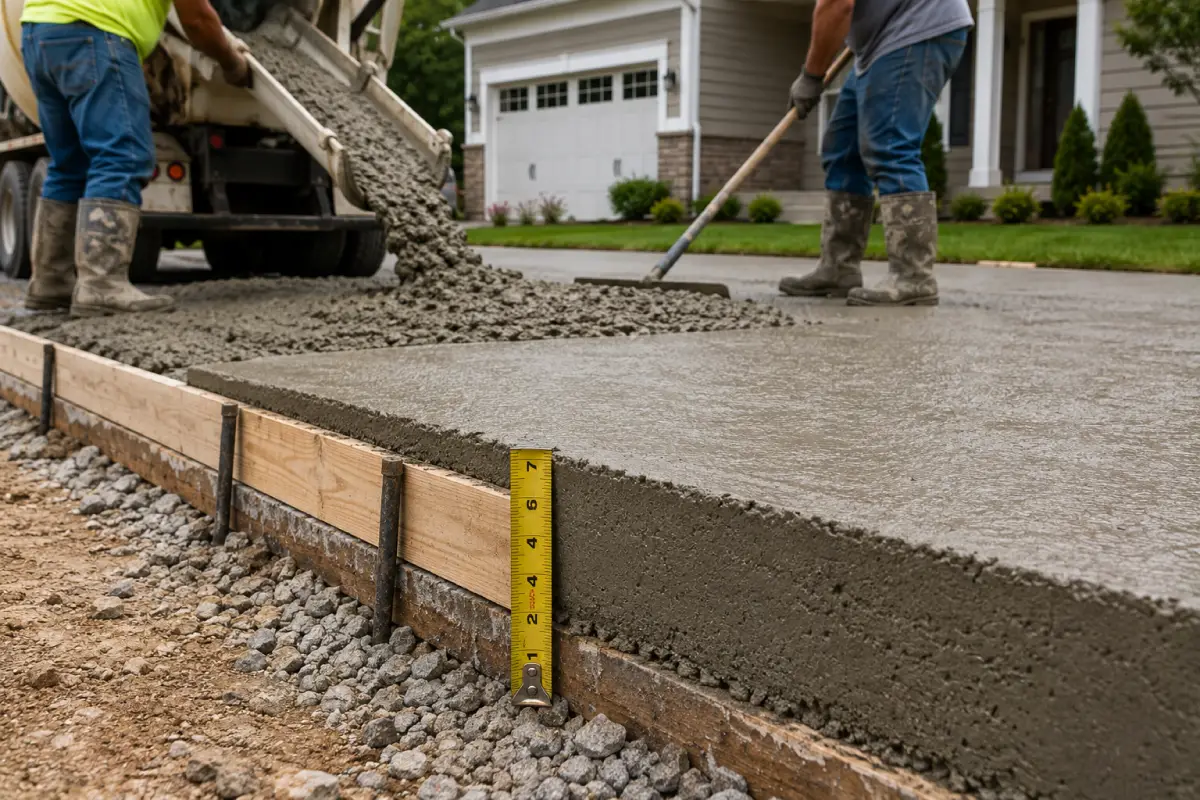
Standard Concrete Driveway Thickness
For most residential driveways, the standard thickness is:
- 4 inches for typical passenger vehicles
This thickness is generally sufficient for normal daily use when the base is properly prepared.
When You Need Thicker Concrete
In some cases, a thicker slab is recommended to handle additional stress and weight.
- 5 to 6 inches for heavier vehicles such as trucks or RVs
- Driveways with frequent traffic or turning areas
- Areas with weaker soil conditions
Increasing thickness can significantly improve durability and reduce the risk of cracking.
Why Thickness Matters
Concrete that is too thin is more likely to fail under pressure. This can lead to:
- Cracking under load
- Surface breakdown
- Uneven settling
Proper thickness helps distribute weight evenly and protects the base layer underneath.
The Role of the Base Layer
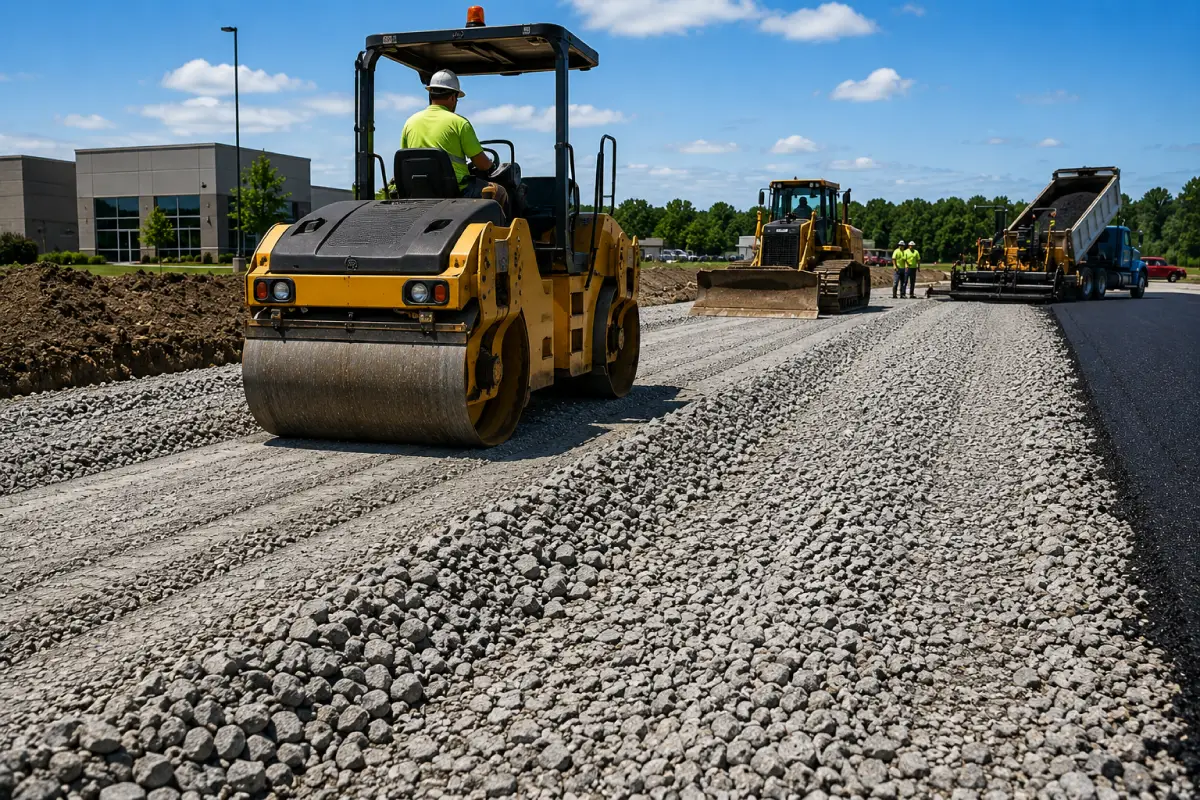
Thickness alone is not enough. The base layer beneath the concrete is just as important.
A properly compacted base provides support and prevents movement that can lead to cracking and sinking.
- Gravel or crushed stone base
- Proper grading for drainage
- Compaction to prevent shifting
Reinforcement and Strength
Reinforcement can improve the strength of a concrete driveway, especially in high-stress areas.
- Rebar or wire mesh adds structural support
- Control joints help manage cracking
- Proper curing improves long-term durability
These factors work together with thickness to create a stronger surface.
What Happens If It’s Too Thin?
Driveways that are too thin often develop problems much sooner than expected.
- Early cracking and surface damage
- Reduced lifespan
- Higher repair or replacement costs
Fixing these issues usually costs more than installing the correct thickness from the start.
Final Thoughts
The standard thickness for a concrete driveway is typically around 4 inches, but thicker slabs may be needed depending on usage and conditions.
Choosing the right thickness, along with proper base preparation and reinforcement, is the best way to ensure a long-lasting surface.