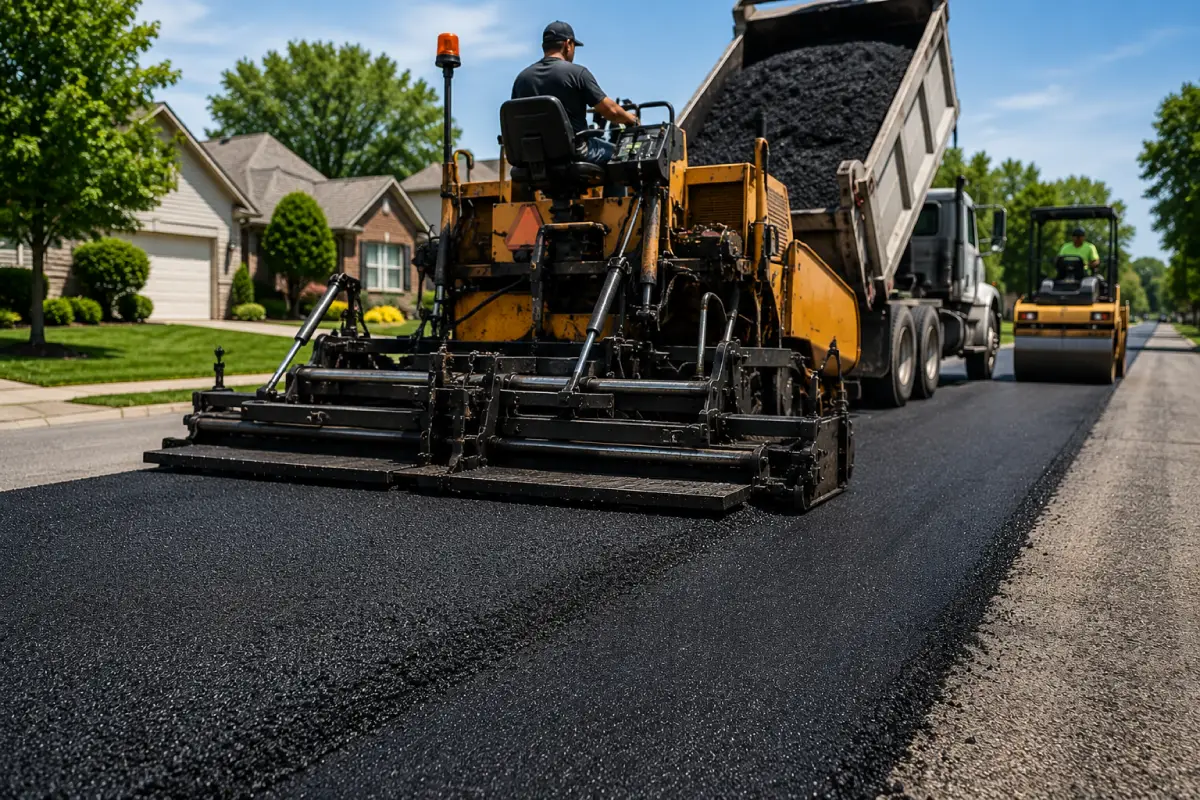
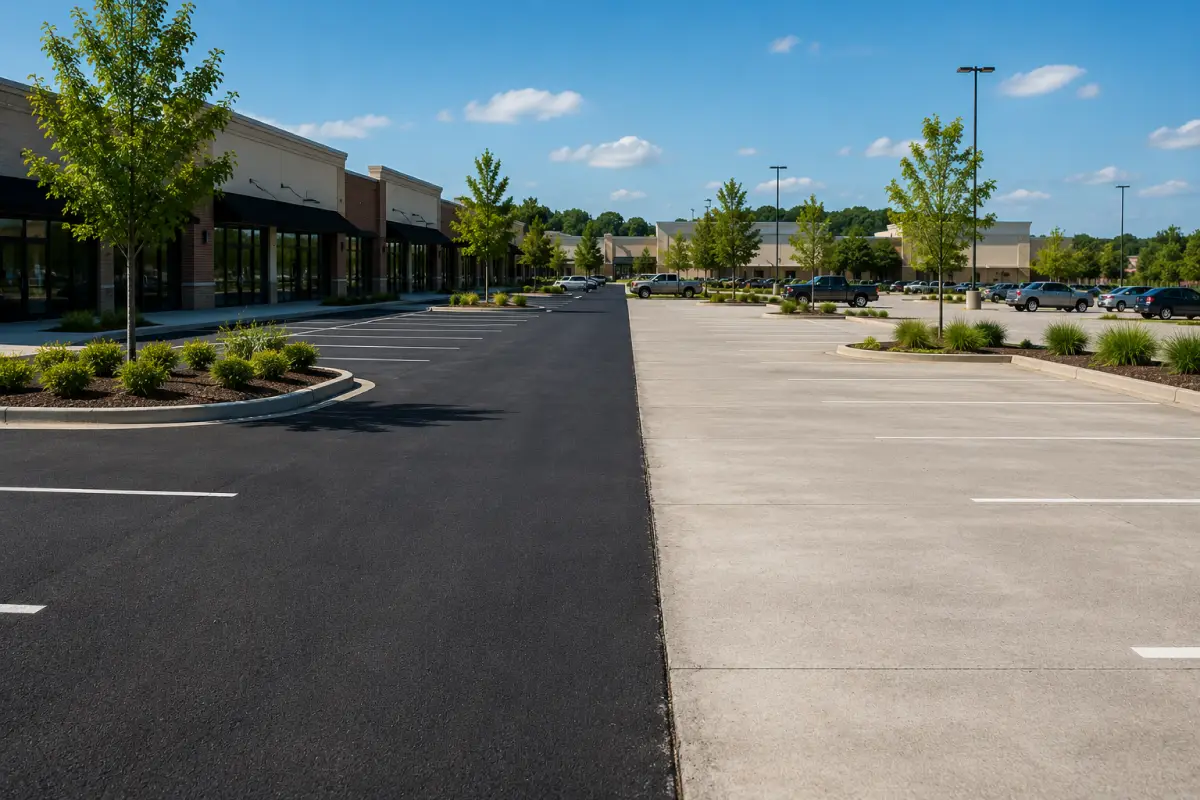
Heat and weather conditions in the South can significantly impact pavement performance, making the choice between asphalt and concrete more important for long-term durability and cost. The right material depends on how the surface will be used and maintained over time.
Asphalt and concrete are the two most common paving materials used for driveways, parking lots, and commercial properties. While both can perform well, southern climates introduce challenges that affect how each material holds up.
Understanding how asphalt and concrete react to heat, moisture, and traffic can help you make a better long-term decision.
How Southern Heat Affects Asphalt
Asphalt is more flexible than concrete, which helps it handle movement and shifting. However, in high temperatures, it can soften and become more susceptible to wear.
Prolonged sun exposure can also cause asphalt to oxidize, leading to fading and surface breakdown over time.
- Can soften in extreme heat
- More prone to surface wear in hot climates
- Requires maintenance like sealcoating
How Southern Heat Affects Concrete
Concrete performs differently in heat. It does not soften like asphalt, making it more stable under high temperatures and heavy loads.
However, it can still crack over time due to expansion and contraction, especially if not installed correctly.
- Holds up well under high temperatures
- Less affected by direct sunlight
- Can crack if expansion joints are not handled properly
Durability and Lifespan
Concrete typically lasts longer than asphalt when installed properly. It is often chosen for projects where long-term durability is the priority.
Asphalt, while having a shorter lifespan, can still perform well with proper maintenance and is easier to repair when issues arise.
Maintenance Requirements
Asphalt generally requires more frequent maintenance, including sealcoating and crack repair, especially in hot climates.
Concrete requires less routine maintenance but can be more difficult and expensive to repair if damage occurs.
- Asphalt: more maintenance, easier repairs
- Concrete: less maintenance, harder repairs
Performance for High-Traffic Areas
For commercial properties and parking lots, traffic load plays a major role in material selection.
Concrete is often preferred for heavy-duty applications due to its strength, while asphalt is commonly used for its cost-effectiveness and flexibility.
Cost Considerations
Asphalt typically has a lower upfront cost, making it a popular choice for large areas. Concrete has a higher initial cost but may offer better long-term value depending on usage and lifespan.
Which Is Better in the South?
There is no one-size-fits-all answer. The best choice depends on your specific needs, budget, and how the surface will be used.
- Choose asphalt for lower upfront cost and flexibility
- Choose concrete for long-term durability and heat resistance
- Consider asphalt for large commercial areas with budget constraints
- Consider concrete for high-load or long-term installations
Final Thoughts
Southern climates place unique demands on pavement. Heat, traffic, and environmental conditions all influence how asphalt and concrete perform over time.
Choosing the right material comes down to balancing cost, durability, and maintenance expectations. Understanding these differences helps you make a more informed decision for your project.