Crack sealing is one of the most effective ways to protect an asphalt parking lot, helping prevent water intrusion, slow pavement deterioration, and extend the life of the surface before more expensive repairs become necessary.
Every asphalt parking lot develops cracks over time as traffic, sunlight, temperature changes, and weather gradually wear down the pavement. While small cracks may not appear serious, they often become the entry point for water that can weaken the foundation below.
Addressing cracks early is one of the simplest and most cost-effective ways to preserve your parking lot and avoid premature resurfacing or reconstruction.
What Is Crack Sealing?
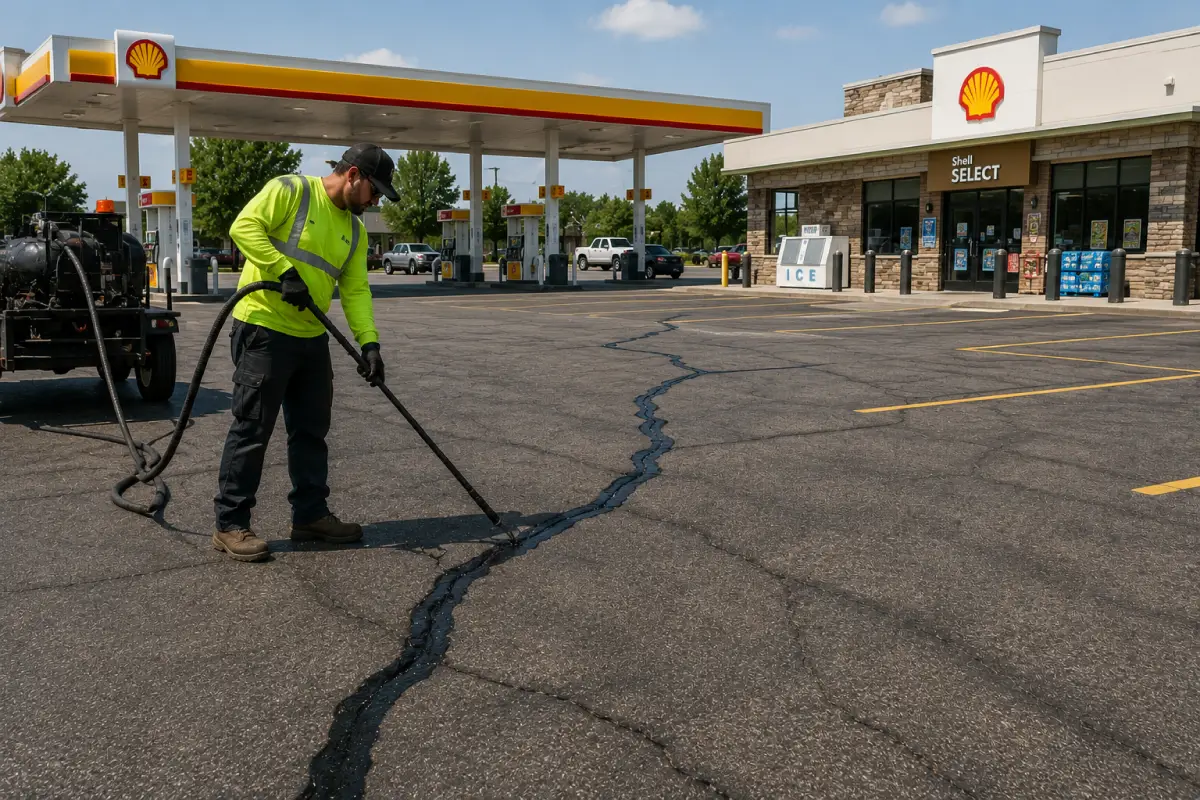
Crack sealing is the process of cleaning existing pavement cracks and filling them with a flexible sealant designed to keep water and debris from entering the asphalt.
Unlike temporary fillers, professional crack sealants expand and contract with changing temperatures, helping maintain a watertight seal throughout the year.
Why Small Cracks Become Big Problems
Asphalt naturally expands and contracts with seasonal temperature changes. As cracks widen, rainwater begins reaching the aggregate base beneath the pavement.
- Water weakens the foundation.
- Traffic places additional stress on unsupported asphalt.
- Cracks grow larger with each season.
- Potholes eventually begin to form.
What starts as a simple crack can eventually require costly structural repairs if left untreated.
Benefits of Parking Lot Crack Sealing
- Prevents water from reaching the pavement base.
- Slows oxidation and asphalt deterioration.
- Reduces pothole formation.
- Extends pavement lifespan.
- Lowers long-term maintenance costs.
- Improves the overall appearance of the parking lot.
When Should Cracks Be Sealed?
The best time to seal cracks is before they become widespread or begin allowing significant water intrusion.
Property owners should consider scheduling crack sealing when they notice:
- Multiple visible surface cracks
- Seasonal expansion of existing cracks
- Water collecting in cracked areas
- Early signs of pavement aging
Crack Sealing vs. Patching
| Crack Sealing | Patching |
|---|---|
| Prevents water intrusion | Repairs existing pavement failure |
| Preventative maintenance | Corrective repair |
| Lower cost | Higher cost |
| Extends pavement life | Restores damaged areas |
Crack sealing is intended to stop pavement deterioration before more invasive repairs become necessary.
How Crack Sealing Fits Into a Maintenance Plan
Crack sealing works best when combined with routine inspections, sealcoating, drainage maintenance, and timely repairs.
Together, these services help maximize the lifespan of commercial parking lots while minimizing long-term ownership costs.
Final Thoughts
Crack sealing is one of the most affordable ways to protect an asphalt parking lot from water damage, potholes, and premature deterioration.
Addressing cracks early helps preserve the pavement structure, reduce repair costs, and keep commercial properties looking safe and professional for years to come.