A driveway installation involves more than just pouring asphalt or concrete, and each step plays a critical role in how long the surface lasts. Understanding the process helps you prepare and avoid surprises.
Whether you are installing an asphalt or concrete driveway, the process follows a series of structured steps designed to ensure durability and performance.
Knowing what to expect ahead of time can help you plan your project, manage timelines, and make informed decisions.
Site Evaluation and Planning
Every driveway installation begins with evaluating the property. This includes checking soil conditions, grading, drainage, and how the driveway will be used.
Proper planning ensures the driveway is designed to handle traffic and weather conditions over time.
Clearing and Preparation
The installation area must be cleared of existing materials, vegetation, and debris. In some cases, old pavement may need to be removed.
This step ensures a clean, stable foundation for the new surface.
Grading and Base Installation
A strong base is essential for a long-lasting driveway. The ground is graded to create proper drainage, and a compacted base layer is installed.
This foundation supports the pavement and helps prevent cracking, sinking, and water damage.
Installing the Paving Material
Asphalt Driveways
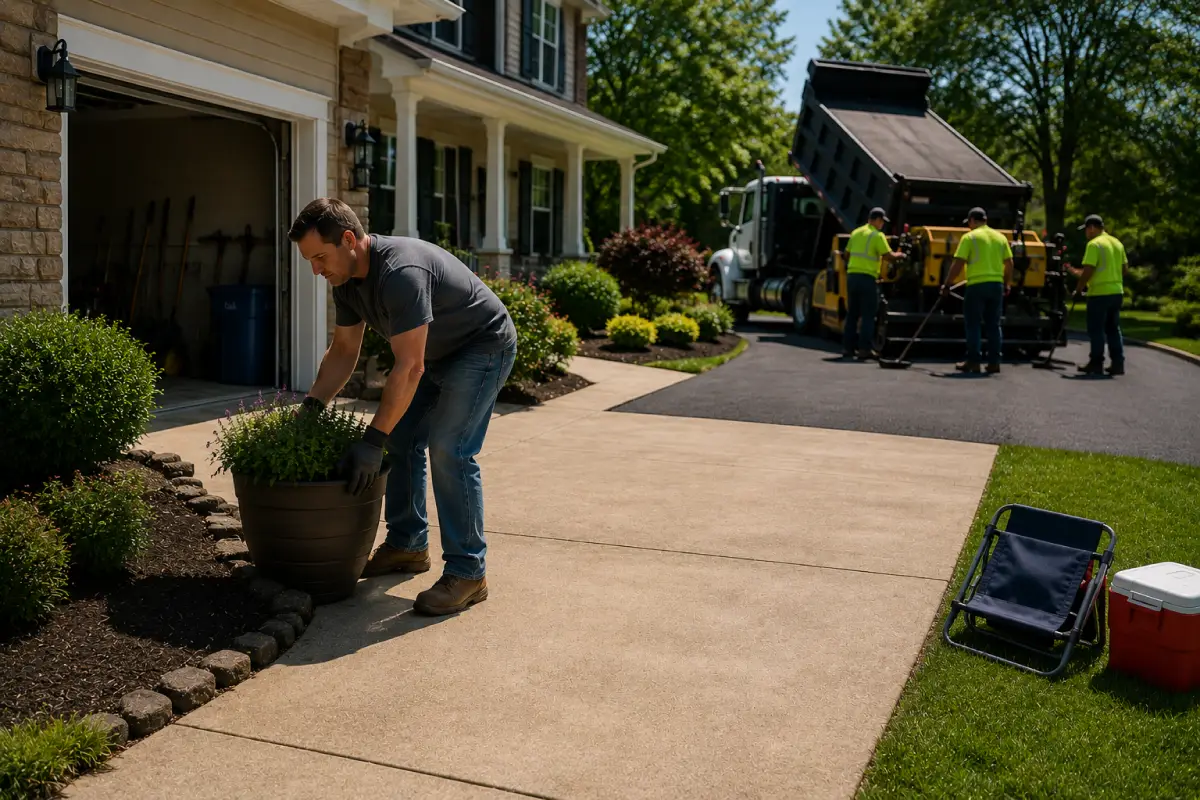
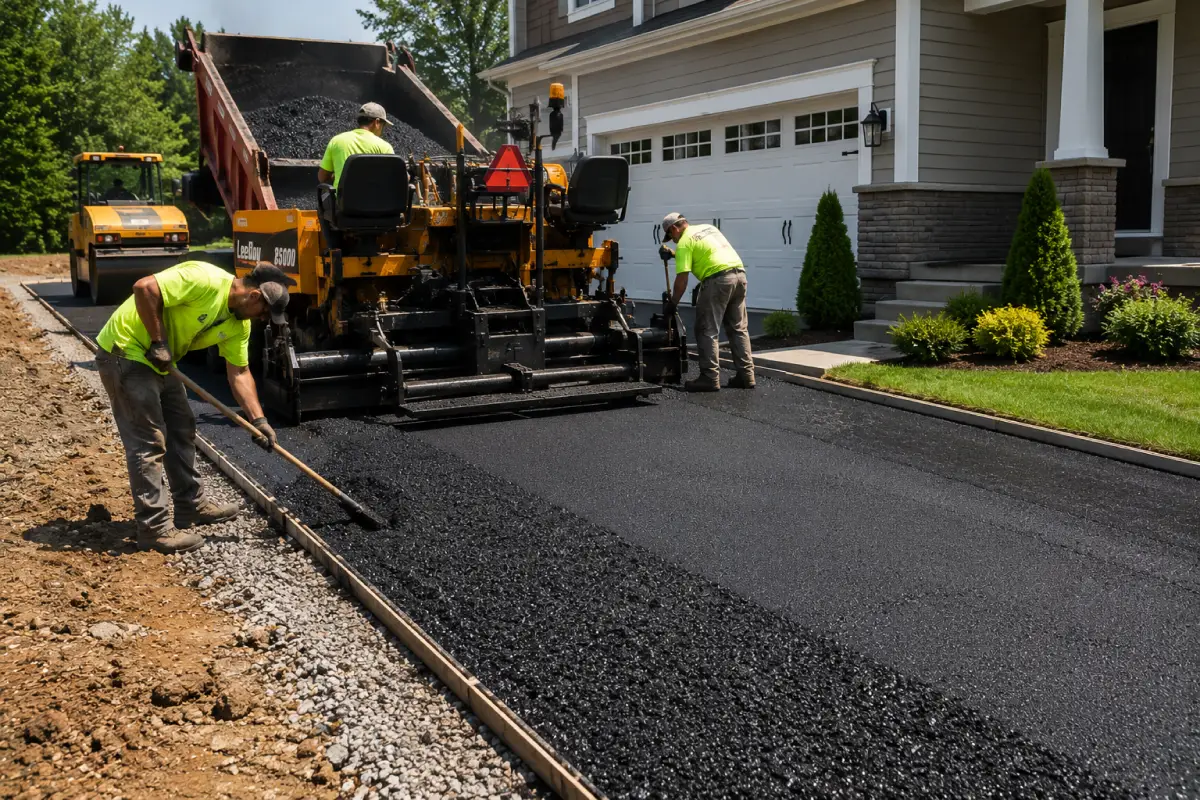
Asphalt is installed while hot and compacted to create a smooth surface. It sets relatively quickly, allowing for faster project completion.
Concrete Driveways
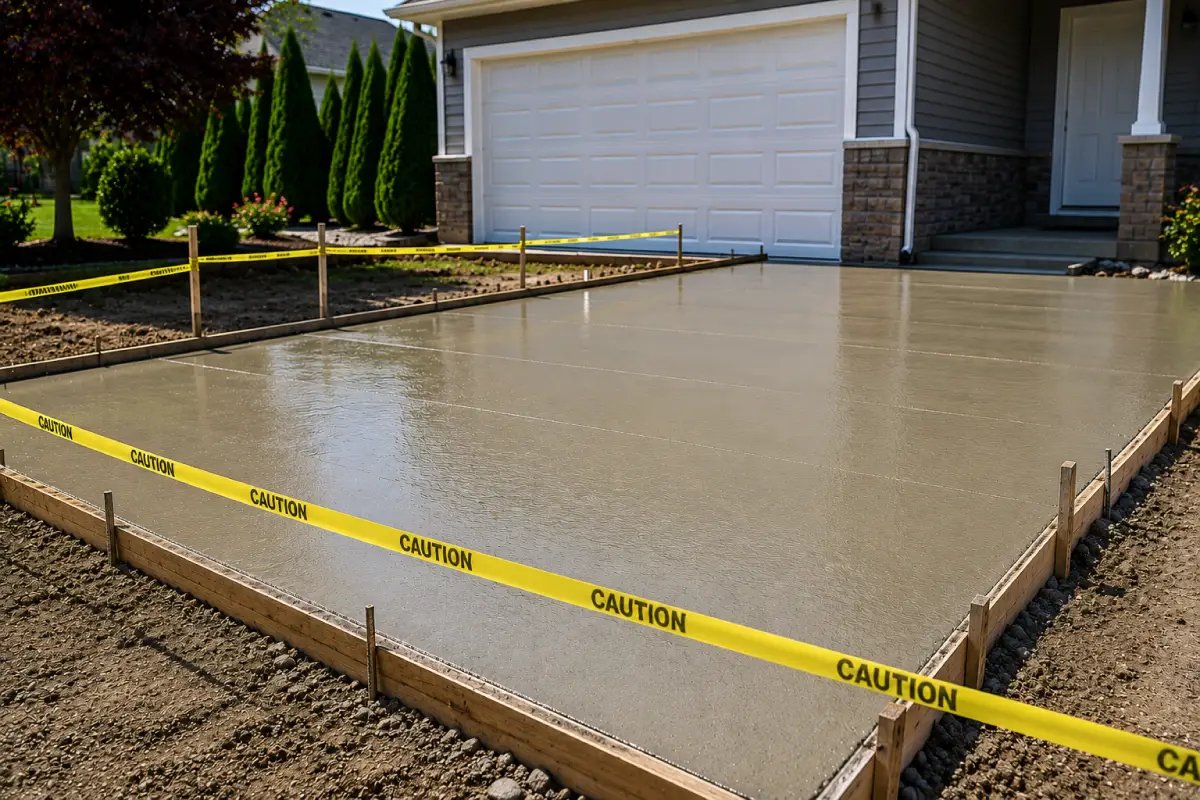
Concrete is poured, spread, and finished before it begins curing. It requires more time to fully harden but offers long-term durability.
Finishing Touches
Once the material is installed, finishing steps are completed. This may include smoothing, edging, and adding surface textures.
For concrete, this can also include decorative finishes or control joints to manage cracking.
Curing and Drying Time
The new driveway needs time before it can handle regular use.
- Asphalt: can typically be used sooner but continues to harden over time
- Concrete: requires a longer curing period before full use
Following these timelines is important to prevent early damage.
Common Delays to Expect
Several factors can affect the timeline of a driveway installation:
- Weather conditions
- Site preparation challenges
- Material availability
Planning for potential delays helps set realistic expectations.
Final Thoughts
A driveway installation is a structured process that requires proper preparation, materials, and execution. Each step contributes to the strength and longevity of the final surface.
Understanding what to expect helps you make better decisions and ensures a smoother project from start to finish.